Communication Nation® by The Children’s Hour
Exploring communication through media, languages, and community building

Communication Nation
Exploring communication through media, language, and community building
Communication Nation is a free radio, podcast, and curriculum series produced by The Children’s Hour Inc. The series and accompanying curriculum explores various forms of communication through media, languages, and community building.
Our curriculum satisfies national and state education standards for students in 3rd through 6th grades.
The objective of this series and its accompanying educational materials serves as tools for families and educators in supporting building of critical thinking skills and historical awareness, celebrating diverse cultural and linguistic identities, as well as promoting tolerance and empathy.
Find the audio and accompanying Learning Guides full of vocabulary, discussion questions, writing prompts, print-ready activities, book lists and additional resources below.
Episode 1 - Speaking the Truth: Media Literacy & Misinformation
We can only have effective communication when we can trust our sources. In this first episode, we focus on media literacy with Eisha Buch from Common Sense Media, an organization that helps kids and families understand the media they use every day. Eisha explains that media literacy is all about thinking critically about the media we consume. This means asking questions about what we see, read, and hear to determine if it’s trustworthy and helpful. We dive deeper into the concept of media literacy by learning the difference between misinformation and disinformation. Everyone has a bias, and we learn how to look for bias in our media, and be aware of the sources in our media. Finally, we think about our own “media diet,” which is the amount and types of media we consume every day.
This episode comes with a free Learning Guide.
Click here for a preview & to download
Listen to the following segments and use the activities and resources in the Learning Guide (above) to further learning
Part one - Media Literacy
Speaking the Truth Part 1: Media Literacy
Part two - Misinformation
Speaking the Truth Part 2: Misinformation
Part Three - Bias
Speaking the Truth Part 3: Bias
Episode 2 - Mother Tongues: Diversity of Spoken Languages
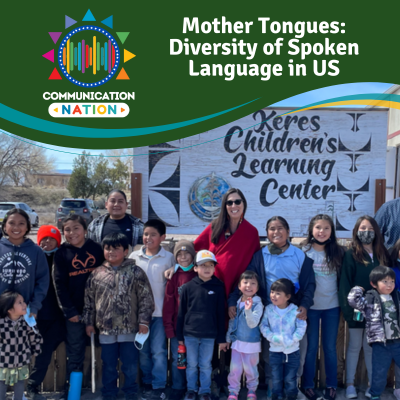
Communication Nation Episode 2, Mother Tongues explores some of the different languages people speak and why they are so important. Hosted by Katie Stone and featuring the TCH Kids Crew, this episode takes us on a journey to understand how our native languages, or mother tongues, shape our identity and culture. We meet Joanna Ho, an author who wrote a book called “Say My Name” which highlights the importance of pronouncing names correctly, as names carry deep meaning and respect for a person’s heritage. Then we go to Cochiti Pueblo in New Mexico to learn about how the Keres Children’s Learning Center is preserving the Keres language for future generations. We discover the challenges faced by indigenous languages and the efforts to keep them alive through education.
This episode comes with a free Learning Guide.
Click here for a preview & to download
Listen to the following segments and use the activities and resources in the Learning Guide (above) to further learning
Part One - What's In A Name?
Mother Tongues Part 1: What's In A Name?
Part two - Saving America's First Languages
Mother Tongues Part 2: Saving America's First Languages
Part Three - Preventing Extinction of Indigenous Languages
Mother Tongues Part 3: Preventing Extinction of Indigenous Languages
Episode 3 - Other Voices: Nonverbal Communications

Our bodies speak. Communication Nation Episode 3, Other Voices explores the wide array of nonverbal communication, though our hands, gestures, and our bodies. Katie talks with Marci Laurel, a speech language therapist who teaches neurodivergent children and adults the skills of nonverbal communication. We also meet Brad Klein, a Child of Deaf Parents or CODA comedian, and his deaf parents Marty and Candy. In a conversation with our Kids Crew, we learn about sign language and deaf culture. Some people communicate using assistive technology devices, and many of us use voice to text technology to speed our writing. Rio Rancho Public Schools in New Mexico uses assistive communication technology in every classroom, and on all playgrounds. Tibbany Ho, the Assistive Technology Coordinator for the district explains how AT works, and why it helps everyone understand one another a little better.
This episode comes with a free Learning Guide.
Click here for a preview & to download
Listen to the following segments and use the activities and resources in the Learning Guide (above) to further learning
Part one - Nonverbal Communication
Other Voices Part 1: Nonverbal Communication
Part two - Sign Language & Deaf Culture
Other Voices Part 2: Sign Language & Deaf Culture
Sign Language is for Everyone
The Klein family told us that they wish everyone knew some sign language. It would make their lives much easier, and it’s a great way to communicate when you want to speak without using your voice. You can learn sign language online for free!
Check out these videos from ASL Kids.
Part Three - Assistive Technology
Other Voices Part 3: Assistive Technology
Episode 4 - Together We Can: Teambuilding
Communication Nation Episode 4, Together We Can explores how teambuilding happens with good communication skills. Combining all we have learned in our other episodes, our Kids Crew meet actor and theater educator Doug Montoya, who lead Katie and the kids in an improvisation workshop. By following some simple rules, we create a team dynamic using our words to make our group stronger. This episode explores other ways we use teambuilding to create community, including through sports. Throughout human history we have used fun and games to build strong communities that work well together. Katie teaches us about the traditional indigenous games of Pok-a-Tok from the Mayan people of Central America, and Incan Chasquis, plus the many games we have imported to the Americas from around the world.
This episode comes with a free Learning Guide.
Click here for a preview & to download
Listen to the following segments and use the activities and resources in the Learning Guide (above) to further learning
Part one - The Art of Improv
Together We Can Part 1: The Art of Improv
Part two - Staying Connected
Together We Can Part 2: Staying Connected
Part Three - Community Building
Together We Can Part 3: Community Building
This series was produced by our Executive Producer, Katie Stone, with help from producers Christina Stella, Gus Tafoya, Eli Henley, Sarah Gabrielli, McKenzie Graunke and Thaniel Lentz. Chad Scheer provided live engineering at Outpost Performance Space. Amber Shiel writes our learning guides. These episodes were recorded at Outpost Performance Space, Cochiti Pueblo, and the solar powered Sunspot Solar Studio in Albuquerque, New Mexico.
© 2024-2026 The Children’s Hour Inc, All Rights Reserved
This program is made possible by funding from the National Endowment for the Humanities and the United We Stand Connecting Through Culture Initiative, and by the New Mexico Humanities Council. Any views, findings, conclusions, or recommendations expressed in this program do not necessarily represent those of the National Endowment for the Humanities or the New Mexico Humanities Council.